
The Reserve Bank of India has marginally increased its GDP forecast for the current fiscal to 6.7 per cent while slightly lowering the inflation projection to 5 per cent. The central bank noted that while domestic economic activity shows resilience, global turbulence, particularly re-escalating conflicts and volatile oil prices, continues to pose risks to the inflation outlook.

Defence Minister Rajnath Singh has called for India to become a global leader in advanced technologies, particularly in strengthening its non-destructive testing (NDT) ecosystem. He emphasised the need for indigenous capabilities, consistent quality assurance, and the integration of advanced digital technologies like AI and ML to ensure reliability and self-reliance in defence applications.

A top Iranian official has blamed the US and Israel for the disruption of global supply chains due to the West Asia conflict, stating that Tehran is not happy about the consequences faced by countries like India.

Mercedes-Benz India's Managing Director & CEO Santosh Iyer stated that demand continues to outstrip supply, particularly for the CLA electric vehicle, with over 1,000 orders and deliveries extending to March-April 2027. The company could have sold an additional 1,000 vehicles if supply had been adequate.

Prime Minister Narendra Modi lauded India's 7.8 per cent GDP growth, achieved despite global conflicts and instability. He emphasised the importance of Swadeshi and self-reliance for a developed India by its 100th year of Independence, urging citizens to avoid unnecessary foreign expenditures.
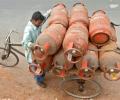
Argentina has significantly increased its LPG exports to India to help mitigate shortages caused by the ongoing conflict in West Asia. This partnership is becoming increasingly important for India's energy security.

Mercedes-Benz CEO Ola Kllenius believes India is poised to become a significant manufacturing and export hub for the luxury carmaker, citing the country's growing market, supplier ecosystem, and engineering capabilities. The company also anticipates electric vehicles (EVs) will constitute a substantial 20% of its India sales by 2027.
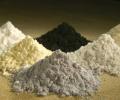
A new study reveals that despite China's significant control over global rare earth mining and processing, its dominance has a critical weakness: the US and Japan hold the majority of core patents for advanced rare earth functional material technologies. This technological gap means China lags in higher-value applications, impacting its strategic advantage in the industry.

Crude oil futures surged over 3 per cent, snapping a three-session losing streak, as renewed military escalation in West Asia revived fears of supply disruptions, driving prices higher on both domestic and international exchanges.

Mahindra Group Chairman Anand Mahindra announced the company would adopt an 'attack mode' strategy, accelerating investment, innovation, and execution to capitalise on opportunities arising from prolonged geopolitical and economic uncertainty.

Preeti Lobana, Google India VP, stated on Wednesday that Google views AI as an "economic equaliser" and a democratic technology. Speaking at Google Cloud Day, she highlighted AI's potential to empower businesses, especially SMEs, in India's journey towards Viksit Bharat 2047. Google has committed USD 15 billion to scale India's digital and AI infrastructure, including an AI hub in Visakhapatnam, to support the IndiaAI Mission.

The Quad grouping has expanded cooperation in critical minerals and energy, while unveiling new measures to boost maritime surveillance and port infrastructure across the Indo-Pacific. This move comes against the backdrop of China's growing military posturing in the region, with ministers reiterating strong opposition to destabilising actions and expressing serious concerns over militarisation of disputed features.

Indian companies' overseas expansion plans are holding strong despite geopolitical tensions in West Asia, driven by structural factors like supply-chain diversification, free trade agreements, and market expansion, according to Ajay Sharma, managing director and head of banking at HSBC India.

Garment workers in Bangladesh are staging widespread demonstrations and clashing with police, demanding a significant increase in their minimum monthly wage from Tk 12,500 to Tk 30,000. The protests, which have been ongoing for weeks, have led to highway blockades, factory closures, and the deployment of paramilitary forces. This unrest threatens Bangladesh's crucial garment export sector, which accounts for over 80% of the country's earnings. A government-formed Minimum Wage Board is deliberating on a revised pay structure, with its next meeting scheduled for November 23.
IBM Chairman and CEO Arvind Krishna details the company's substantial annual investment in India and its global USD 10 billion commitment to quantum computing over the next five years. He addresses the potential for AI to displace 10-20 per cent of jobs, particularly in the BPO sector, while also highlighting India's significant opportunity in the AI ecosystem. Krishna urges India to accelerate AI adoption, scale existing tech initiatives, and build its semiconductor manufacturing, advocating for a light-touch approach to AI regulation and emphasizing critical thinking in an AI-driven economy.

Indian benchmark stock indices, Sensex and Nifty, advanced for the second consecutive day, driven by softening crude oil prices and a positive trend in global markets. Despite some profit-taking in IT and metal shares, auto stocks outperformed, contributing to the overall gains.

Russian President Vladimir Putin has arrived in India for a three-day visit to attend the BRICS summit and hold bilateral talks with Prime Minister Narendra Modi, focusing on expanding trade, investment, and energy cooperation amidst global geopolitical challenges.

Prime Minister Narendra Modi will review the impact of the West Asia conflict on India's food, energy, and fuel security with senior cabinet ministers. The meeting follows previous discussions and concerns raised about global energy crises and supply chain disruptions.
Industry leaders at an AIMA panel discussion emphasised the need for businesses to quickly adapt to changing market conditions and invest in technologies like artificial intelligence to build resilience and achieve long-term growth. They highlighted the current era of uncertainty driven by geopolitical tensions, supply chain disruptions, and rapid regulatory changes, stressing that tactical responses are as crucial as long-term strategy.

The BRICS summit in New Delhi brings together leaders from major emerging economies to address global challenges like trade disputes, geopolitical upheavals, and the economic impact of conflicts in Ukraine and West Asia. India, as chair, aims to position BRICS as an economic growth engine, focusing on the Global South's food, energy, and supply chain security. The summit also highlights the grouping's expansion and its growing influence in global governance.

Mumbai-based TCR Engineering Services has become the first independent company in India to receive Nadcap accreditation for materials testing at its Navi Mumbai and Vadodara laboratories, a crucial step for Indian suppliers to enter the global aerospace supply chain.

Despite the ongoing West Asia conflict causing global trade route disruptions, Mercedes-Benz India reports resilient customer demand, particularly for its new electric CLA sedan, though it faces challenges with component supply delays and escalating shipping costs.

India's manufacturing sector activity growth declined to a five-year low in July, with the HSBC India Manufacturing Purchasing Managers' Index (PMI) falling to 53.5 from 54.2 in June, driven by a slower rise in new business orders and challenging market conditions.

Prime Minister Narendra Modi, addressing the BRICS summit, called for a fundamental shift in global governance, advocating for the replacement of the current 'pyramid of privilege' with a 'platform of partnership' where the Global South becomes a 'rule shaper' rather than a 'rule follower'.

Prime Minister Narendra Modi has introduced a 'Sapta Dhara' (seven-stream) reform framework, aiming to propel India into a developed nation by 2047. This comprehensive plan focuses on key sectors including manufacturing, agro-food processing, technology, logistics, defence, green and blue economy, and soft power, leveraging the nation's youth potential.

Over the next four-five years, the company plans to set up eight warehouses and new transport facilities.

GE Aerospace is utilising artificial intelligence solutions, developed by its Bengaluru team, to significantly improve aircraft engine inspection, analytics, and maintenance. These innovations have reduced turnaround times by at least five days, enhancing engine durability, reliability, and time on wing, with specific tools like the AI-enabled Blade Inspection Tool cutting inspection times by 50%.

The Indian government has significantly simplified its visa regime, reducing main categories from 13 to nine and sub-categories from 49 to 23. This initiative also cuts down fields in visa application forms by 65-70 per cent, aiming to make the process more coherent and responsive for foreign nationals. Key changes include renaming the Tourist Visa to Visitor Visa, consolidating medical and student visas, and introducing a Production Investment Business Visa.

India is set to amend its National Anti-Doping Act to criminalise the trafficking and distribution of prohibited substances to athletes, with potential jail terms for suppliers, including medical practitioners who knowingly prescribe banned drugs. The amendments are open for public feedback until June 18 and are expected to be tabled in the monsoon session of Parliament.

'It is a blunt and dangerous attempt to pressure India to sign BTA on one-sided terms.'

New Delhi was told it had given something up; in reality it had stopped talking about it, notes Dr Abhishek Puri.

Despite significant price differences, Indian farmers are increasingly adopting non-subsidised speciality fertilisers, which are seen as a potential solution to the rising fertiliser subsidy burden exacerbated by global supply shocks.

Hyderabad-based Midwest Ltd has become the first Indian private company to secure overseas critical mineral mines, sealing a deal with Indonesia's state-run PT Perusahaan Mineral Nasional (PERMINAS) to ensure a long-term supply of rare earths.

Aerospace major Embraer and the Mahindra Group have identified Nagpur as a potential manufacturing hub for the C-390 Millennium military transport aircraft, should their bid for India's multi-billion-dollar Medium Transport Aircraft (MTA) deal be successful. This strategic partnership aims to establish a localised production and support ecosystem in India, aligning with the 'Make in India' initiative and strengthening the country's indigenous aerospace capabilities.

To address the supply crunch, CII has suggested leveraging the existing excess capacity in the Indian industry; rolling back import duty hike to look for alternative sources of imports; expanding credit to manufacturing units with quick loan sanctions, and one-time emergency waiver of non-performing asset regulations for three months.
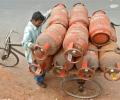
Researchers at CSIR-NCL have developed a technology for producing dimethyl ether (DME) as an alternative to liquefied petroleum gas (LPG), potentially reducing India's reliance on imports and enhancing energy security.

New photographic evidence and a Pentagon inspector general's report confirm extensive damage to US military installations across the Middle East due to Iranian missile and drone strikes. The report details billions in financial costs, structural losses to hundreds of buildings, and damage to dozens of aircraft, contradicting previous assertions about US military readiness and ordnance stockpiles. The conflict also led to disruptions in the Strait of Hormuz, impacting global oil prices.

Mahindra Group CEO Anish Shah emphasizes the critical role of Artificial Intelligence, advocating for its meaningful integration at scale across all aspects of the company. He highlights that AI is redefining industries and decision-making, urging a proactive approach to leverage its potential. Shah also addresses global uncertainties, stating the group's commitment to accelerate amidst challenges and aim for global leadership.

Prime Minister Narendra Modi spoke with Iranian President Masoud Pezeshkian, condemning attacks on critical infrastructure in West Asia and emphasising the importance of safeguarding freedom of navigation and ensuring secure shipping lanes.

Hindustan Aeronautics Limited (HAL) and Safran Aircraft Engines have signed a long-term agreement for the production and supply of turbine ring forgings for the CFM LEAP engine programme. This multi-year contract, signed at the Farnborough International Airshow, will see HAL manufacture critical superalloy components at its Bengaluru facility, enhancing India's capabilities in advanced aerospace manufacturing and expanding its presence in the international civil aerospace market.
